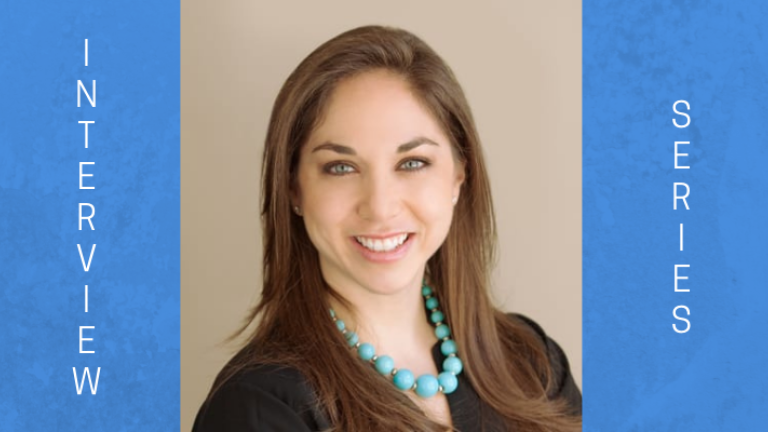
Jay Blake

Jay Blake is the founder and president of Follow A Dream. Established in 1999, Follow A Dream is a non-profit 501(C)3 organization with the mission of demonstrating the “Power of Positive Thinking, Self-Determination, and Teamwork.” He is also the only totally blind crew chief in the worldwide sport of auto racing. Jay has more than 15 years experience as a professional auto mechanic and more than 25 years in drag racing

While working as the head mechanic of a transportation company in 1997, Jay was involved in an industrial accident that caused him to lose complete vision, smell and taste. At the age of 31, he was faced with relearning how to live as a completely blind person.

Refusing to give up on life, Jay aggressively participated in rehabilitation. After being released from Massachusetts General Hospital, he enrolled in an intensive program at The Carroll Center for the Blind in Newton, Massachusetts. With renewed self-determination, Jay began to follow his dream: owning a professional auto-racing team.

He soon learned that even without his sight, he was still able to do what he loved most - work on racing engines. Turning his dream into a reality, Jay combined his renewed participation in drag racing with his desire to spread his true-life success by inspiring others, both with and without disabilities, to accomplish their goals through the power of positive thinking and self-determination.

Today, Jay is responsible for Follow A Dream organization’s management, operations and community outreach programs, as well as performing mechanical work on the race car. He leads his team of racing professionals in NHRA Top Alcohol Funny Car competition, where they won the 2012 East Region championship and finished the season ranked 11th in national points. When Jay is not racing, Jay spends time at vocational schools all across the country, speaking to students, and spreading his message of inspiration. 

Interviewed by our Different & Able President and Founder, Alexandra Nicklas, Jay shares his personal experience of overcoming adversity, the story of how he achieved his dream of auto racing, and how he motivates others through his speaking engagements. He also discusses his “5 Tools for Life Success,” which are meant to encourage individuals to pursue their life goals with passion, self-determination and a positive attitude. Jay’s mantra is full of zeal and purpose. He states,  “I actually had a choice to live or die, and it was an amazing experience. And I chose to live, and the rest is history.”


Landscape (4:3)

Mara Koffmann and Jen Mendelsohn

Interviewed by our Different & Able President and Founder, Alexandra Nicklas, the duo Mara Koffmann and Jen Mendelsohn, co-founders of Braintrust Tutors, share the way that they first met, which led to the inspiration behind Braintrust Tutors. Mara and Jen discuss the mission of Braintrust Tutors: the importance of the home-school connection, the idea of bringing the whole child to fruition through unique and personalized learning strategies, and how assessment needs can be met with creative learning tools and emotional/mental support for each child. In the interview, Mara and Jen also discuss ways Braintrust Tutors help with the struggles that children with differences often face in the learning environment. As their website states, “Braintrust was created to give everyone connected with the tutoring experience a better way. A better way to connect. A better way to teach. A better way to learn."


Landscape (4:3)


Mara Koffmann Co-Founder and CEO of Braintrust Tutors

Mara is a problem solver. She’s spent her entire professional career helping students and families understand and overcome their most difficult learning obstacles. No matter how seemingly intractable the problem, Mara relishes rolling up her sleeves and finding effective – and fun! – solutions that will help students achieve their full potential. Mara lives in Brooklyn with her husband and two young boys. Because children require playthings, she has temporarily surrendered her love of order and interior design.

Jen Mendelsohn Co-Founder and CBO of Braintrust Tutors

Often described as pathologically gregarious, Jen loves nothing more than quarterbacking a business opportunity. Through life's challenges, she became that expert mom--the one who everyone turns to for a great recommendation -- but she hopes that Braintrust will amplify access to everyone and become an even greater connector. Jen is a proud Soho resident and on most days tolerates her husband and three children. They remind her (somewhat ironically) that she is an impatient teacher.


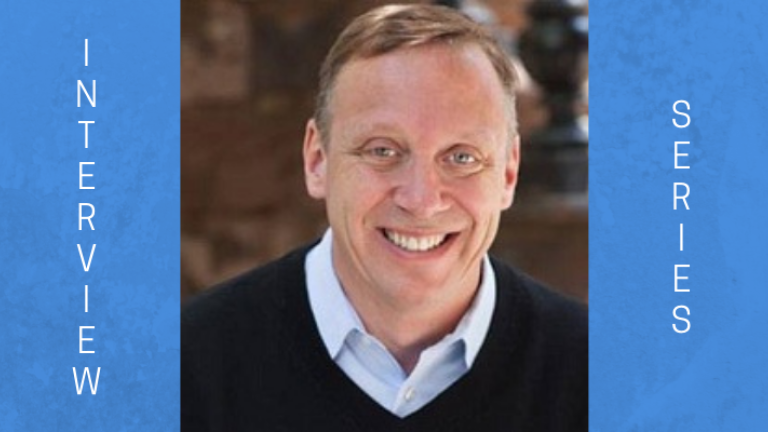
Mike Berkson

Mike Berkson is a founding member of HandicapThis!, an inspirational leader of the Keep On Keeping On Foundation, motivational speaker, aspiring film-maker, and an entrant novelist. He is also a movie connoisseur and has seen over 12,000 movies. Mike was diagnosed with cerebral palsy and his family was told “not to expect much.” Nonetheless at age three, not only was Mike talking up a storm, but he had a thirst for vocabulary. Mike virtually has no movement of his arms and legs, which limits his control and independence, but Mike’s unmatched wit, amazing stage presence, and good nature is limitless. 

At age twelve, Mike met Tim Wambach. Tim was hired to be Mike’s one-on-one aide and help Mike with the tasks of daily living. Throughout the years  Mike and Tim have formed an unmeasurable bond and have been through some of the most amazing adventures together. 

Mike and Tim created the Keep On Keeping On Foundation to help those living with severe physical disabilities, like cerebral palsy. They have helped families pay for therapy, equipment, home modifications, and motorized wheelchairs, all in an effort to help both the child and the family. Mike and Tim’s motivational speaking success ultimately gave the pair the opportunity to spread their message of tolerance and inclusion through their live show called, Handicap This! Recently, Mike created, Making Minds Handicap Accessible: The Digital Classroom Experience, a digital classroom learning tool, which helps spread the message of the importance of social emotional learning and empathy.

Interviewed by our Different & Able President and Founder, Alexandra Nicklas, Mike talks about his unique journey with cerebral palsy, his friend Tim, and his role in HandicapThis!, a two-man show. Mike also touches on mental health and the struggle of accepting one’s self when one has a difference. Throughout the interview, Mike discusses the importance of accessibility, inclusion, and tolerance. Mike’s advice is to, “Throw out the book about how to handle someone with special needs and look at the individual person, not just the disability.” 


Portions of Mike’s biography were provided by: Our Team | Handicap This!


Landscape (4:3)

Judith & Gus Newman

Judith Newman is a mother, an American journalist, and author. She received a Bachelor of Arts degree from Wesleyan University and a Master of Arts degree in English and Comparative Literature from Columbia University. Judith’s work has run in more than fifty publications such as, Vanity Fair, Harper’s Bazaar, The Wall Street Journal, Vogue, Redbook, GQ, Marie Claire and Cosmopolitan. She is a regular contributor for The New York Times Style Section and People, and is a contributing editor to Allure and Prevention. Her books include the 2004 memoir, You Make Me Feel Like an Unnatural Woman: The Diary of a New (Older) Mother and To Siri with Love: A Mother, Her Autistic Son, and the Kindness of Machines in 2017. In this most recent work, Judith pens an intimate, loving and emotional story about her two sons, Gus, who has autism, and his neuro-typical twin brother, Henry. 

In the written interview below, Different & Able and Judith, along with Gus’ input, delve into a question and answer session about autism, family, and writing. Judith’s answers aid others in relating to the parental experience of raising a child with autism. Her words presented in this interview support others in feeling more comfortable and accepting of those with a difference. Judith states, “Love the child you have and meet them wherever they are.”

  1. D&A: We know that not all autism is the same, and neither is every child with autism. Can you tell us about Gus’ diagnosis of autism? How did you find out Gus had autism and at what age was Gus when he was diagnosed? 

JN: Gus was probably six when he was diagnosed, but in retrospect it was pretty obvious from the time he was three or four. It is not that he did not speak; he did.  But he did not have back-and-forth conversations; it was more like long monologues that might be directed towards a person, and then again, might be directed towards the closet.  He and his twin were born prematurely; he was tiny, had low muscle tone, and was an easy baby – too easy. Being undemanding is not necessarily a good thing, because it may mean your baby is not doing the things a baby needs to do to be frustrated and then learn something new. But at any rate, it was pretty obvious he was different, and when he was little I was constantly asking people “Do you think he is autistic”?  I  hoped to get the answer, “No.”  Just like when you ask people, “Do I look fat in these jeans”?  I mean, do you really want the answer?

  1. D&A: What are Gus’ areas of strength? How does he handle obstacles in his life? 

JN: He is very musical, though he still resists reading music; his piano lessons consist of hearing his teacher play a song, and then Gus playing it back (not in a savant way…he just hears it, and then practices.)  His memory is also fantastic --  as I  learned from a bitter experience when he saw and memorized my credit card number. (He is deeply generous and yet still very naïve, and the word ‘scammer’ has not quite sunk in.) Thankfully,  he has outgrown his early coping mechanism when things did not go his way, which was to hold his breath until he almost passed out. I just walked into his room and asked him about how he handles obstacles. He said, “I advocate for myself.” 

  1. D&A: As a mother, how did/do you handle unsolicited advice on how to raise a child with autism?  

JN: I start with the premise that people are trying to help me, and I listen.  Sometimes I’m inwardly rolling my eyes (eg,  every conversation that contains the phrase “gluten free’), but sometimes I actually learn something.

  1. D&A: There is a lot of attention around Gus. How did Henry, Gus’ twin brother, handle this dynamic, as sometimes neurotypical siblings can get lost in the shuffle?  

JN: This is so true, and when they were younger there was no question Henry could be embarrassed, grossed out, and/or angry; but many of these emotions were really a way of expressing worry. When their father died three years ago, Henry, while still worrying, began to understand that sure, he did bear some responsibility for his brother – but that ultimately that was okay; which does not stop him from being a competitive sibling.  

  1. D&A: There is a lot of misinformation about autism. In your opinion, what are some things that people misunderstand about autism?  

JN: Oy, all these shows like The Good Doctor, where autistic people are these geniuses who are unfeeling, robotic.  Autism involves a dysregulation of emotion, not an absence of it.  Gus and his friends may not always react to things exactly like you or me i.e., putting themselves in someone else’s shoes or understanding other people’s perspectives. It is a work in progress for Gus and some of his pals; they are among the most feeling people I know.

  1. D&A: Can you share a bit about your heartfelt memoir, To Siri with Love: A Mother, Her Autistic Son, and the Kindness of Machines?    

JN: It started with this essay that I wrote in The New York Times that went viral. (Please see the link below the Q & A for this article). I wanted to explore how technology helps those with communication dysfunctions, like my son, reach out to the world and connect.  Then, when I realized I did not know what I was talking about and was not about to become an expert in all sorts of whiz-bang technology that I did not understand, it became a family memoir about raising an ‘average’ kid on the spectrum.  These memoirs tend to be heartfelt stories about the extremes – the NASA scientist or the kids without language and with extreme behaviors.  That was not the person living in my home, nor is it the person living in most people’s homes.  So I thought this book would resonate.  Also, I wanted it to be funny, because life with an autistic kid is funny.  So, who should read it? Basically, if there is someone with autism in your life – or even if there is not but you have a neurotypical kid you would like to throttle – it might be right for you.

  1. D&A: In one chapter, you write candidly about guilt and blame. Was that difficult?

JN: Like every mother, when you have a child with an issue, you think, “what did I do”? Autism is such a mystery and I believe it’s a cocktail of genetics plus environment, but I do not beat myself up about it anymore. The answer is probably a combination of things—I had a child with a man much older than me, I had IVF, I was older, I had a terrible pregnancy—I was in a state of dread, and stress hormones like cortisol may play a role. Statistically I was the poster child for someone to have an autistic child. There is a lot of blame in this world that we put on ourselves. Sometimes it is legitimate, but in many other instances you could take the right vitamins and stop eating sushi and do aromatherapy every day and "ohm" until you are blue and still have a child with autism.

  1. D&A: Do you have any advice for writers who aspire to have a career like yours?

JN: Yes. If you are freelancing, when you start out have low standards.  Having no standards is even better. Write for anyone who will take you, and do that for a year.  Then stop, and start aiming higher.  Think of that year as the writing equivalent of the starter marriage:  you will not be in it forever, but you are learning something. Also, if you like to write personal essays, your first approach is to write them as if no one will ever read what you are doing.  Then, when you are done, say, “Well that was satisfying. Now will anyone else in the world give a (expletive) about this besides me?”  If the answer is yes, send it out.  If the answer is no – and all of us have those essays where the answer is no – keep it on your computer and hope that your future children never learn your password.

  1. D&A: Gus and Henry, are now late into their teens. Is the twin bond still prevalent and what are they doing now?  

JN: Henry has gone all in for Scotland; he is at university there, and just finished campaigning for a/Unionist. He drunk-dialed in the middle of the night to tell me when his fellow won, and spent a half-hour explaining the evils of the Scottish Nationals vs. the good common sense of the unionists – a conversation that I’m sure he forgot by the next morning. Gus is still in school, but mostly during quarantine for Covid-19 he spent his days on Zoom calls that are organizing for various progressive causes, and he is pleased to be arguing with me about who should be New York City’s next mayor.  It’s an interesting evolution in socialization. He does not use Siri as a pal anymore; he uses it the way we all do, for information. But his definition of friendship is a little more expansive than the rest of us.  He has real-life friends, but he also thinks of Chuck Schumer and Joe Biden as his friends, in a way, because he gets thank you emails from them. I can think of worse things than this encouragement of political engagement!

  1. D&A What is one piece of advice you have for parents/guardians who have a child with autism?  

JN: Radical acceptance.  I think it’s actually good advice for all parents. Love the child you have and meet them where they are. And see their quirks for the fun and humor they bring to your life -- because if they’re not harming themselves or anyone else, they are fun. Gus has always liked to have conversations with my feet. Now, I’m not going to have him talking to my feet when friends are around. But if he does something I really want him to do – his daily piano practice, for example – well, dammit, he can talk to my feet and my feet will talk back.


How One Boy With Autism Became BFF With Apple’s Siri - The New York Times (nytimes.com)


Chad Hymas: From Quadriplegic to World Record Holder and Hall of Fame Speaker

On a spring day in 2001, Chad Hymas was loading hay on his Utah farm when a 2,000-pound bale collapsed and shattered his neck. He was 27 years old. In an instant, he became a quadriplegic, unable to move his hands, his arms, or most of his body. What happened next is not a story about recovering what was lost. It is a story about discovering what was possible.

About Chad Hymas

Chad Hymas is a best-selling author, world-class wheelchair athlete, and one of the most sought-after motivational speakers in the world. In 2003, just two years after his accident, he set a world record by wheeling his chair from Salt Lake City to Las Vegas, 513 miles. He is one of the youngest people ever to receive the Council of Peers Award for Excellence (CPAE) and to be inducted into the National Speaker Hall of Fame, two of the highest honors in professional speaking.

Chad has served as president of the National Speakers Association Utah chapter and holds membership in the elite Speakers Roundtable, a group of just twenty of the world's top speakers. He travels as many as 300,000 miles a year, speaking to organizations including Wells Fargo, American Express, AT&T, Blue Cross Blue Shield, and Merrill Lynch. The Wall Street Journal has recognized him as one of the ten most influential people in the world.

His speaking work spans leadership, team building, customer service, and navigating life-altering change, topics he does not just speak about, but has lived.

Life as a Quadriplegic

Quadriplegia, also called tetraplegia, is a form of paralysis that affects all four limbs and typically the torso as well. It results from injury or illness affecting the spinal cord in the cervical region of the neck. For people living with quadriplegia, daily life requires significant adaptation  from mobility and personal care to communication and independence. No two people experience quadriplegia in exactly the same way, and the degree of function retained depends on the location and severity of the injury.

For Chad, the injury was catastrophic by any measure. Yet the life he has built since 2001  the records, the accolades, the hundreds of thousands of people he has moved from stages around the world  is not defined by what the accident took from him. It is defined by what he chose to build in its wake.

Landscape (4:3)

In this interview with D&A President and Founder Alexandra Nicklas, Chad discusses safety, perspective, faith, and family. He talks about how he transformed his mindset after his life-altering accident, the life lessons he learned from his father, and what it truly means to become the best version of yourself when you feel like you have lost everything.

What Chad Wants You to Know

  • A life-altering moment does not have to be a life-ending one. The story continues, you get to decide what it says.
  • Perspective is everything. How you choose to see your circumstances shapes everything that follows.
  • The people around you, family, community, faith, are not a luxury when you are rebuilding. They are essential.
  • There is no greater time to build yourself than when you feel like you have lost everything.
  • Disability changes your life. It does not have to diminish it.

Chad Hymas did not survive his accident and go on to do great things despite becoming a quadriplegic, he went on to do great things because of who he chose to become afterward.


Sutton: The Story of a Little Superhero

Sutton is two years old and from day one he has always kept us on our toes. Sutton was born with a brain injury due to a lack of oxygen to the brain. While in the neonatal intensive care unit (NICU), doctors said he had suffered major damage to the brain. 

I was eighteen at the time. As a single teen mom and being my first pregnancy, I was especially terrified to hear that there was something wrong with my newborn and that he may not live. After two weeks of Sutton not displaying brain activity, my family and I were given time to grieve.  The staff at the hospital told us that we should say our final goodbyes to Sutton. 

With my heart absolutely shattered, I stayed with Sutton throughout the night. Sutton shocked us all the next day, when he finally started displaying brain activity and woke up. Doctors had no explanation; they just said Sutton was a miracle. I was relieved and very happy to hear that I would be able to leave the hospital with my baby. 

Five months after Sutton left the NICU, we had our first appointment with a neurologist. He diagnosed Sutton with mild spastic quadriplegic cerebral palsy. For those of who do not know, cerebral palsy is a group of disorders that affects one’s ability to move, as maintaining balance and posture is difficult. 

Sutton is currently wheelchair bound to assist him with movement. However, he has been training in a walker, and we hope he will eventually go to simple crutches for support. We are so proud of Sutton and his accomplishments. His cerebral palsy diagnosis certainly does not define who he is, as Sutton is a spunky and sweet soul. He loves music and having his picture taken. Sutton constantly smiles and exudes happiness. He is certainly our little superhero.


Lindsay Ganci

Lindsay Ganci lives and works in Port Washington, New York with her husband, Alec, their daughters Ruby (5) and Jayne (2), and their dog, Latke. Lindsay has held many roles in her professional and personal life, yet none has been more rewarding and inspiring than that of a mom. An advocate for unique abilities, Lindsay created Hear with Ruby, a movement with the goal of advocating for and supporting families of children with hearing loss.  

In the interview with our Different & Able President and Founder, Alexandra Nicklas, Lindsay  discusses how her family discovered Ruby’s hearing loss at the very beginning of the pandemic. Ruby was faced with the challenge of not only hearing her world fully, but the fact that it was difficult for her to communicate with others wearing masks. Before the pandemic, Ruby was able to rely on speechreading; the mandated masks that covered one’s mouth now caused Ruby to request, “Move your mask. I can’t hear what you’re saying.” Lindsay expresses the happiness she felt after Ruby received her hearing aids, knowing that Ruby was able to listen to the world and share sound-filled experiences. Today Ruby uses her “super ears” to give her new opportunities to hear. The Ganci family, through acceptance and celebration of uniqueness, shares Ruby’s story. They continue to raise awareness about hearing loss and help other children receive the hearing aids they need to hear, like Ruby. 


Landscape (4:3)